
High purity Acrylamide
High Purity Acrylamide: Uses, Applications and Benefits
Aug
Discover the uses, applications and benefits of high purity acrylamide, including polyacrylamide production, gel electrophoresis, laboratory research and industrial processes.
High Purity Acrylamide: Uses, Applications and Benefits
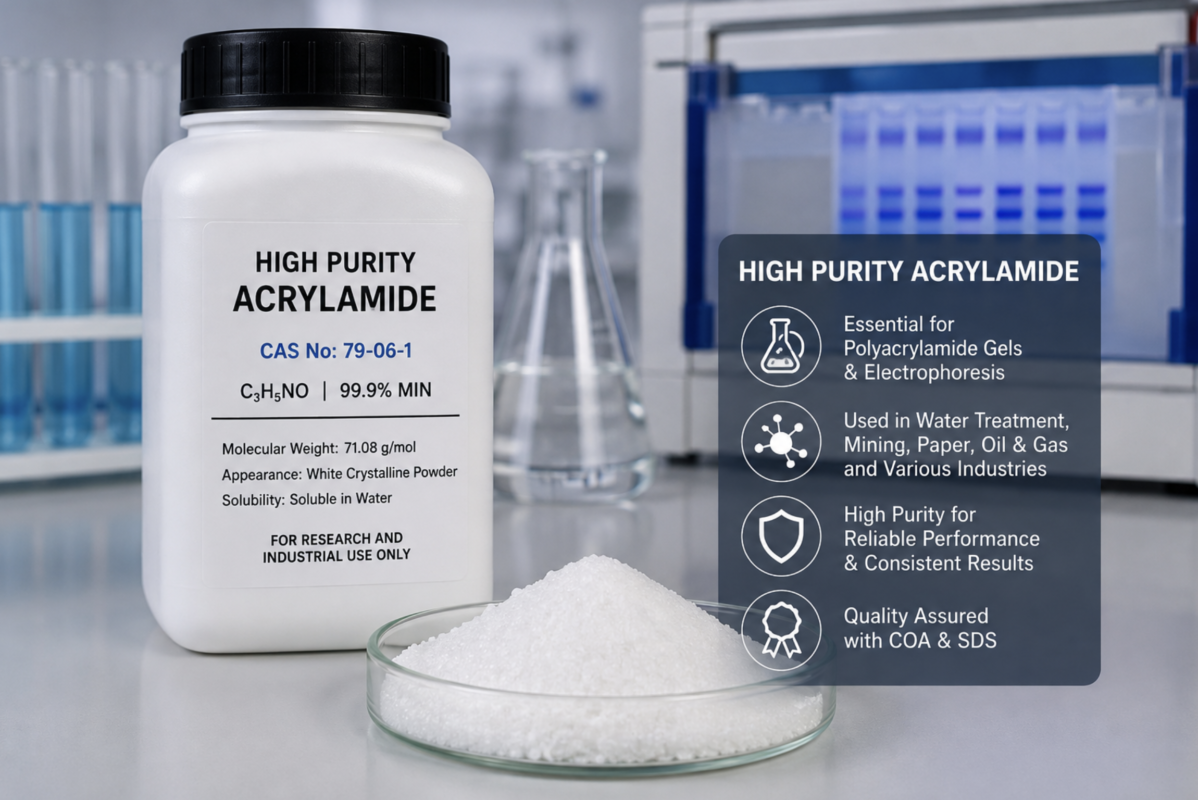
High purity acrylamide is an important chemical raw material used across laboratory research, biotechnology, polymer manufacturing, water treatment, mining, paper production and other industrial applications. As a highly reactive monomer, acrylamide is primarily valued for its ability to polymerise and form polyacrylamide and related copolymers with properties suited to specific technical applications.
For laboratories, high purity acrylamide is widely associated with the preparation of polyacrylamide gels for electrophoresis, including PAGE and SDS-PAGE applications. In industrial environments, acrylamide is used as a key building block for polymers that can function as flocculants, processing aids, binders and thickeners.
Understanding the uses, applications and benefits of high purity acrylamide can help laboratories, manufacturers and procurement professionals select the appropriate material for their requirements.
What Is High Purity Acrylamide?
Acrylamide is an organic compound also known as 2-propenamide or acrylamide monomer. Its CAS number is 79-06-1, and its molecular formula is CH₂=CHCONH₂. It is commonly supplied as a crystalline solid and is highly soluble in water.
The primary importance of acrylamide comes from its ability to undergo polymerisation. This process produces polyacrylamide, a versatile polymer that can be formulated with different molecular weights and charge characteristics for specialised applications.
High purity material is particularly important where impurities could affect:
- Laboratory reproducibility
- Polymerisation performance
- Analytical applications
- Product consistency
- Research results
- Manufacturing quality control
For electrophoresis applications, suppliers commonly offer acrylamide specifically designated as suitable for electrophoresis, with high assay specifications.
Major Uses of High Purity Acrylamide
1. Polyacrylamide Production
One of the most important uses of acrylamide is the manufacture of polyacrylamide and related copolymers.
Polyacrylamide can be produced in different forms, including:
- Non-ionic polyacrylamide
- Anionic polyacrylamide
- Cationic polyacrylamide
These different polymer types can be selected according to the characteristics of the intended process. The Australian Drinking Water Guidelines, for example, describe the manufacture of non-ionic polyacrylamide from acrylamide monomer as well as the production of anionic and cationic polymer systems.
Because polyacrylamides can be engineered for specific molecular weights and charge densities, they are used across a wide range of industrial processes.
2. Acrylamide for Gel Electrophoresis
High purity acrylamide is particularly important in polyacrylamide gel electrophoresis.
Polyacrylamide gels provide a matrix used for separating biomolecules, including proteins and other biological materials. Acrylamide is used together with a crosslinking component, commonly bis-acrylamide, to create the gel structure.
Applications include:
- SDS-PAGE
- PAGE
- Protein analysis
- Molecular biology research
- Biotechnology research
- Laboratory testing
- Academic research
The quality of the reagents used in gel preparation can be important for obtaining consistent and reproducible results. Commercial suppliers therefore offer high purity acrylamide powders, premixed acrylamide/bis-acrylamide products and prepared acrylamide solutions for electrophoresis applications.
Why High Purity Matters in Electrophoresis
High purity acrylamide can help laboratories maintain better consistency when preparing polyacrylamide gels. This is particularly important when laboratories require reliable polymerisation and reproducible experimental conditions.
When purchasing acrylamide for laboratory use, buyers may consider:
- Assay or purity specification
- Suitability for electrophoresis
- Certificate of Analysis
- Product documentation
- Packaging size
- Storage requirements
- Batch consistency
High Purity Acrylamide in Water Treatment Applications
A major downstream application of acrylamide chemistry is the production of polyacrylamide-based materials used in water and wastewater treatment.
Polyacrylamides can function as:
- Coagulation aids
- Flocculation aids
- Clarification aids
- Filtration aids
- Sludge thickening aids
- Sludge dewatering aids
In water treatment processes, polymers can help improve the aggregation and separation of suspended particles. Polyacrylamide products are available with different charge characteristics to suit the properties of the water or sludge being treated.
It is important to distinguish between acrylamide monomer and the finished polyacrylamide products used in treatment applications. Where materials are intended for drinking-water treatment, product selection, residual monomer levels and application conditions are subject to applicable standards and regulatory requirements.
Acrylamide Applications in Mining and Mineral Processing
High purity acrylamide also supports the production of polymers used in mining and mineral processing.
Polyacrylamide-based products may be used in processes involving:
- Solid-liquid separation
- Tailings treatment
- Thickening
- Dewatering
- Ore processing
- Process water management
The ability to produce polymers with different molecular and charge characteristics makes acrylamide an important chemical building block for industrial separation processes. Government and technical sources list ore processing and mineral processing among established application areas for acrylamide-derived polymers.
For mining companies and industrial procurement teams, selecting the appropriate chemical grade and polymer system can be important for process efficiency and performance.
High Purity Acrylamide in the Paper and Pulp Industry
The paper and pulp industry is another important application area for polyacrylamide chemistry.
Acrylamide-derived polymers can be used as:
- Retention aids
- Fibre processing aids
- Binders
- Pigment retention aids
- Process additives
Polyacrylamide products can help support paper manufacturing processes by assisting with fibre and pigment retention. Acrylamide and polyacrylamide applications in papermaking are documented among the broader industrial uses of these materials.
Other Industrial Applications of Acrylamide
In addition to laboratory and polymer manufacturing applications, acrylamide chemistry has been associated with a variety of industrial processes.
These include:
Oil and Gas Applications
Polyacrylamides can be used in applications related to:
- Enhanced oil recovery
- Water flooding
- Oil well drilling
- Fluid-loss control
Acrylamide-derived polymers can help modify fluid properties, including viscosity, depending on the polymer system and application.
Soil Conditioning
Polyacrylamide-based products may also be used in soil-related applications, including soil conditioning and erosion-control processes.
Adhesives and Industrial Chemicals
Acrylamide can also serve as a chemical intermediate in the manufacture of specialised products and may be associated with applications involving:
- Adhesives
- Grouting systems
- Dyes
- Coatings
- Textile processing
- Industrial binders
The exact suitability of a specific acrylamide product will depend on its grade, purity, formulation and intended process.
Benefits of High Purity Acrylamide
1. Supports Consistent Laboratory Results
For electrophoresis and other research applications, high quality reagents can support greater consistency between experiments and batches.
High purity acrylamide is particularly relevant where laboratories require controlled reagent quality for gel preparation and analytical procedures.
2. Versatile Chemical Building Block
Acrylamide is a highly versatile monomer because it can be used to manufacture polymers with different properties.
Depending on the polymerisation process and comonomers used, manufacturers can produce materials with different:
- Molecular weights
- Charge densities
- Solubility characteristics
- Processing behaviour
This versatility explains why acrylamide-derived polymers are used across such diverse sectors as water treatment, mining, papermaking and petroleum operations.
3. Important for Polyacrylamide Manufacturing
For companies involved in chemical and polymer manufacturing, acrylamide is an essential raw material for producing polyacrylamide and related copolymers.
Polyacrylamides have established roles in processes involving flocculation, clarification, filtration, sludge handling and industrial separation.
4. Suitable for Specialist Research Applications
High purity acrylamide is widely relevant to research environments, particularly where polyacrylamide gel electrophoresis is required.
Laboratories can choose between:
- Acrylamide powder
- Acrylamide solutions
- Premixed acrylamide/bis-acrylamide products
The most suitable option depends on the laboratory workflow, required concentration and experimental procedure.
How to Choose High Purity Acrylamide
Before purchasing high purity acrylamide, buyers should evaluate more than just price.
Important considerations include:
Purity and Assay
Review the stated assay or purity specification and ensure it is appropriate for the intended application.
Application Suitability
Acrylamide intended for electrophoresis may have different documentation or suitability claims from material intended primarily as an industrial chemical intermediate.
Certificate of Analysis
A Certificate of Analysis (COA) can provide important batch-specific information, including relevant quality specifications.
Safety Data Sheet
Always obtain and review the current Safety Data Sheet (SDS) for the exact product being purchased.
Packaging Size
Depending on usage requirements, acrylamide may be available in laboratory and bulk packaging formats.
Supplier Reliability
A reliable supplier should be able to provide appropriate product information, including specifications and applicable documentation.
Acrylamide Safety and Handling
Acrylamide monomer is a hazardous chemical and should only be handled by appropriately trained personnel using suitable controls and the instructions provided in the product’s current Safety Data Sheet.
Government and supplier safety information identifies acrylamide as a substance requiring careful handling. Appropriate storage, PPE, engineering controls, waste management and emergency procedures should be determined from the SDS and the requirements applicable to the workplace and intended use.
Never assume that the safety information for one supplier’s product automatically applies to another formulation or grade. Always consult the documentation for the specific material being used.
Conclusion: Why High Purity Acrylamide Matters
High purity acrylamide is an important chemical used in laboratory research, polyacrylamide manufacturing and a wide range of industrial processes. Its ability to polymerise makes it a valuable building block for materials used in gel electrophoresis, water and wastewater treatment, mining, mineral processing, paper manufacturing and other specialised applications.
For laboratories, purity and application suitability can be important for reproducible electrophoresis work. For industrial users, acrylamide serves primarily as a raw material for manufacturing versatile polyacrylamide-based products.
When sourcing high purity acrylamide in South Africa, buyers should consider the product’s purity specification, intended application, available technical documentation, COA, SDS, packaging requirements and supplier capability.
Looking for High Purity Acrylamide? Choose a product that matches your specific laboratory, research or industrial requirements, and ensure that the appropriate technical and safety documentation is reviewed before use.