
Magnesium Sulphate
Magnesium Sulphate Price South Africa: Compare Grades, Quantities and Costs
Aug
Understanding how the magnesium sulphate price South Africa varies across different grades and volume tiers is critical for making informed purchasing decisions. When sourcing essential chemical inputs for agricultural operations, water treatment facilities, mining applications, or industrial manufacturing in South Africa, cost efficiency and product reliability are paramount. Procurement managers, commercial farmers, and industrial operators frequently search for clear pricing insights to manage overheads effectively.
At EcoBio Chemicals, transparency, compliance, and quality assurance form the bedrock of our supply operations. This comprehensive guide explores the current pricing landscape for magnesium sulphate in South Africa, evaluating how chemical grades, packaging sizes, and logistical factors influence overall procurement costs.
Navigating Chemical Grades and Their Impact on Price
Not all magnesium sulphate (MgSO₄) is created equal. When reviewing supplier quotations, it is essential to recognize that prices fluctuate based on the specific chemical form, purity level, and intended application:
- Magnesium Sulphate Heptahydrate (Epsom Salt): Formulated as MgSO4•7H2O, this hydrated mineral contains water of crystallization. It is widely demanded in South African agriculture for soil conditioning, fertilizer blending, and livestock feed supplementation, offering an economical solution for nutrient delivery.
- Anhydrous Magnesium Sulphate: With water molecules entirely removed, this concentrated form delivers a higher active mineral content per kilogram. It commands a different pricing structure due to specialized processing and moisture-sensitive handling requirements.
- Agricultural vs. Technical and Laboratory Grades: Agricultural-grade material prioritizes nutrient effectiveness, whereas technical and high-purity grades undergo stricter purification processes to eliminate trace impurities. Matching the correct grade to your operational specifications prevents both overpaying for unneeded purity and risking equipment failure.
Magnesium Sulphate Price South Africa: Quantity and Packaging Tiers:
How Volume Shifts Cost
The magnesium sulphate price per kilogram changes significantly depending on the volume ordered. Understanding how packaging tiers affect your bottom line helps optimize inventory and warehousing budgets:
1. Small-Scale Packaging (1KG and 5KG)
Retail packs and small quantities (1 kg or 5 kg) are tailored for boutique laboratories, specialized horticulture, or small retail outlets. While the initial invoice total is low, the unit price per kilogram is at its highest. This premium covers the extensive labor, custom labeling, and individual packaging materials required for small units.
2. Commercial Quantities (25KG Bags)
For commercial farming enterprises, mid-sized manufacturing plants, and water treatment works, the standard industry packaging is the heavy-duty 25 kg bag. Purchasing at this level substantially reduces the unit price per kilogram, balancing cost efficiency with manageable manual or mechanical handling on-site.
3. Bulk Sacks and Pallet Loads
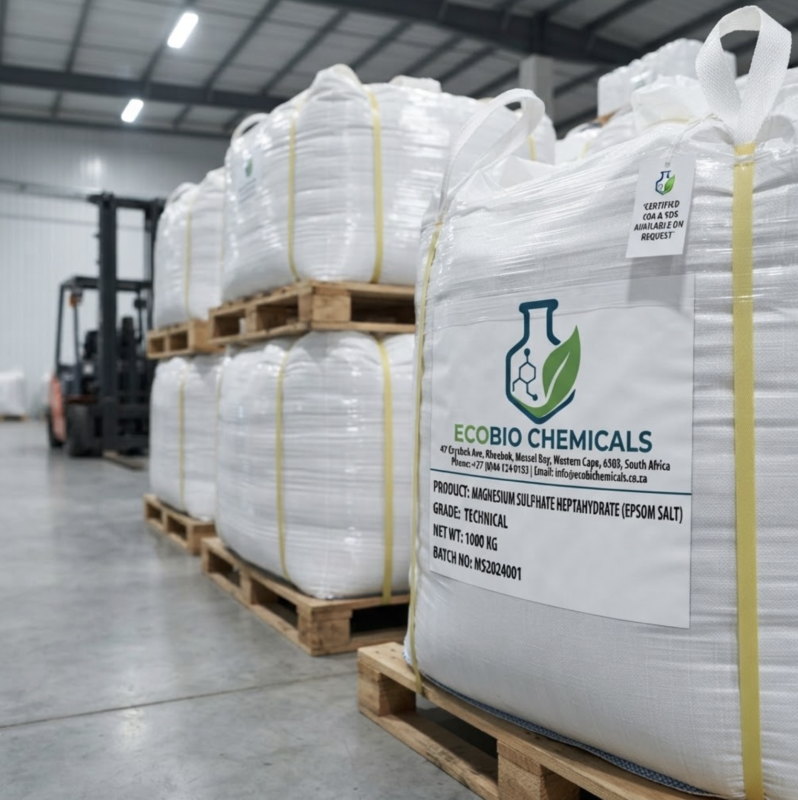
Industrial consumers requiring bulk quantities such as multi-tonne orders or super sacks—benefit from the most competitive unit pricing available. However, bulk buyers must factor in secondary holding expenses, such as dedicated warehouse space equipped with climate control to prevent caking from ambient humidity.
Key Cost Drivers in the South African Market
When evaluating supplier quotations, focusing solely on the baseline chemical cost can lead to unexpected expenses. A complete cost analysis must account for several external variables:
- Hygroscopic Properties and Packaging Integrity: Magnesium sulphate readily absorbs moisture from the atmosphere. High-quality suppliers utilize multi-layer, moisture-resistant packaging with inner liners to prevent caking and product degradation during storage.
- Logistics and Landed Cost: Transport logistics across South Africa’s vast geography heavily influence final expenses. Sourcing from a regional supplier helps minimize freight charges compared to long-distance or cross-border shipping.
- Compliance Documentation: Ensuring that your supplier provides a certified Certificate of Analysis (COA) and a comprehensive Safety Data Sheet (SDS) is vital for regulatory compliance, safety audits, and quality control.
- VAT and Tax Transparency: Always verify whether quoted rates include Value Added Tax (VAT) and local handling fees to avoid hidden charges upon delivery.
Conducting a Like-for-Like Price Comparison
To ensure your enterprise secures optimal value without compromising on quality, utilize a structured approach when comparing supplier proposals:
- Define the Chemical Specification: Confirm whether your application requires magnesium sulphate heptahydrate or anhydrous material.
- Verify Grade Suitability: Ensure the purity level meets your exact operational or regulatory standards.
- Calculate Total Landed Cost: Combine the base product price, packaging fees, delivery charges, and VAT into a single comparative figure.
- Confirm Included Documentation: Check that batch-specific COA and SDS documents are provided with every order.
Partner with EcoBio Chemicals
At EcoBio Chemicals, we provide dependable, fully compliant chemical supply solutions tailored to professional clients across South Africa. Whether you need standard 25 kg commercial sacks, bulk industrial volumes, or expert guidance on technical specifications, our team ensures transparent pricing and consistent availability.
Company Details & Contact Information:
- Company Name: ECOBIO CHEMICALS
- Address: 47 Grysbok Ave, Rheebok, Mossel Bay, Western Cape, 6503
- Phone: +27 (0)44 124 0183
- WhatsApp: +27 (0)83 560 6822
- Email: info@ecobichemicals.co.za
- Company Reg #: K2021627488
- VAT Reg #: 9580672195
Contact our team today to request a formal, transparent quotation tailored to your exact volume requirements and delivery destination.